

Travel Blogs

Monasteries to Mountains: Leh Ladakh's Pristine Wilderness!
Leh isn't your average vacation spot. It's a gut punch of altitude, a kaleidoscope of cultures, and a landscape that screams "adventure" louder than a yak in heat. In the Indian Himalayas, Leh sits at a cool 3,500 m (11,500 ft), where oxygen thins and spirits soar. Here, stark beauty reigns. Jagged peaks pierce the endless blue, painted in hues of ochre and gold by the unforgiving sun.
Leh challenges you. The altitude tests your resilience, the thin air a constant reminder of our human limitations. Leh isn't for everyone. It's for those who dare to push their boundaries, who crave experiences that scar the soul and etch themselves onto your memory. It's for those who seek raw beauty, untamed adventure, and a connection to something bigger than themselves. So, if you're looking for a vacation that will shake you to your core, Leh awaits. Just remember, pack your oxygen mask with your sense of wonder.
Day 1:
On arrival at Leh airport, we feel the crisp mountain air and with a short drive, we check into our hotel New Antelope. The first day is dedicated to acclimatization, allowing our bodies to adjust to the high altitude.
Day 2:

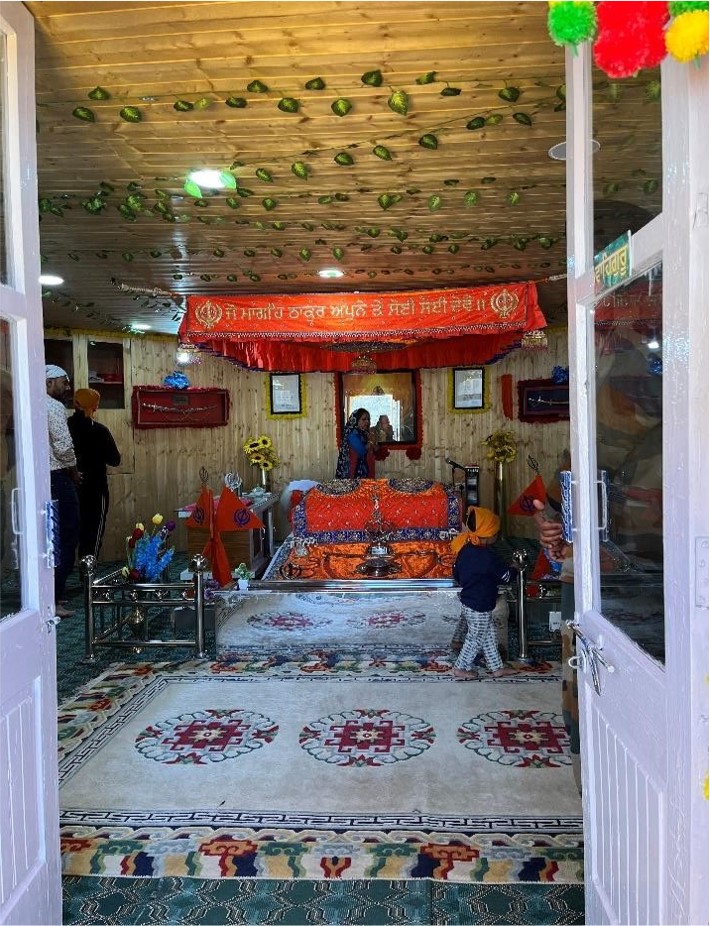
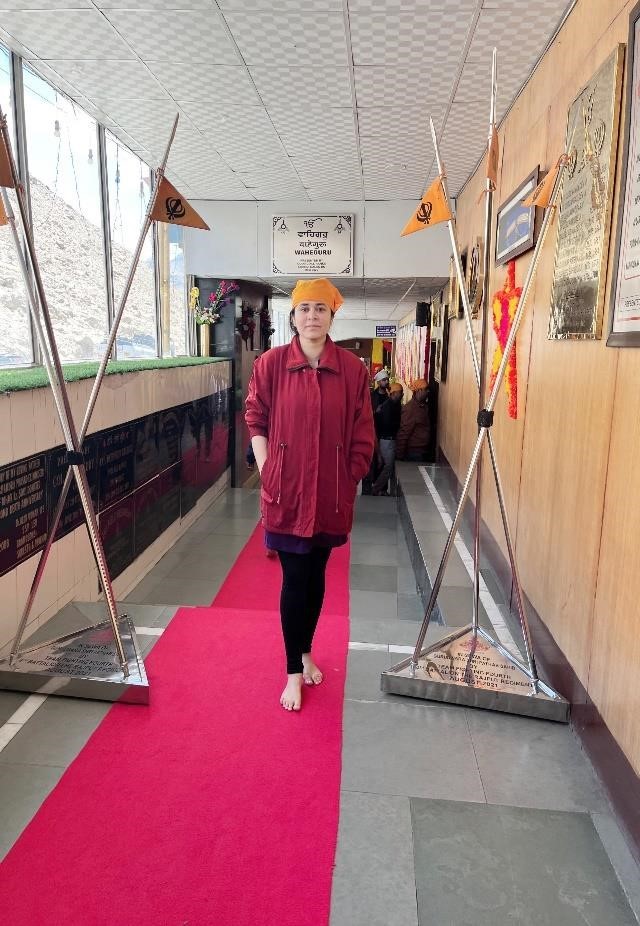
After a day’s rest, the next morning beckons us to get set and explore Leh. Our first stop was the Hall of Fame, a museum constructed and managed by the Indian Army since 1986, is a poignant tribute to the brave soldiers who have defended our borders in the harsh terrain of the Himalayas. It is located on the Leh-Kargil Road about 4km from the city. This is followed by our visit to the revered Gurudwara Pathar Sahib, further on the Kargil Road. Legend has it that Guru Nanakji meditated here and defeated a demon whose boulder turned soft and took on his shape, which was found in 1970, prompting the construction of the Gurudwara by the Indian Army with local assistance. All passing vehicles stop to pray here. We volunteered to serve food to devotees, for the free food provided here as prasad by the Gurudwara.
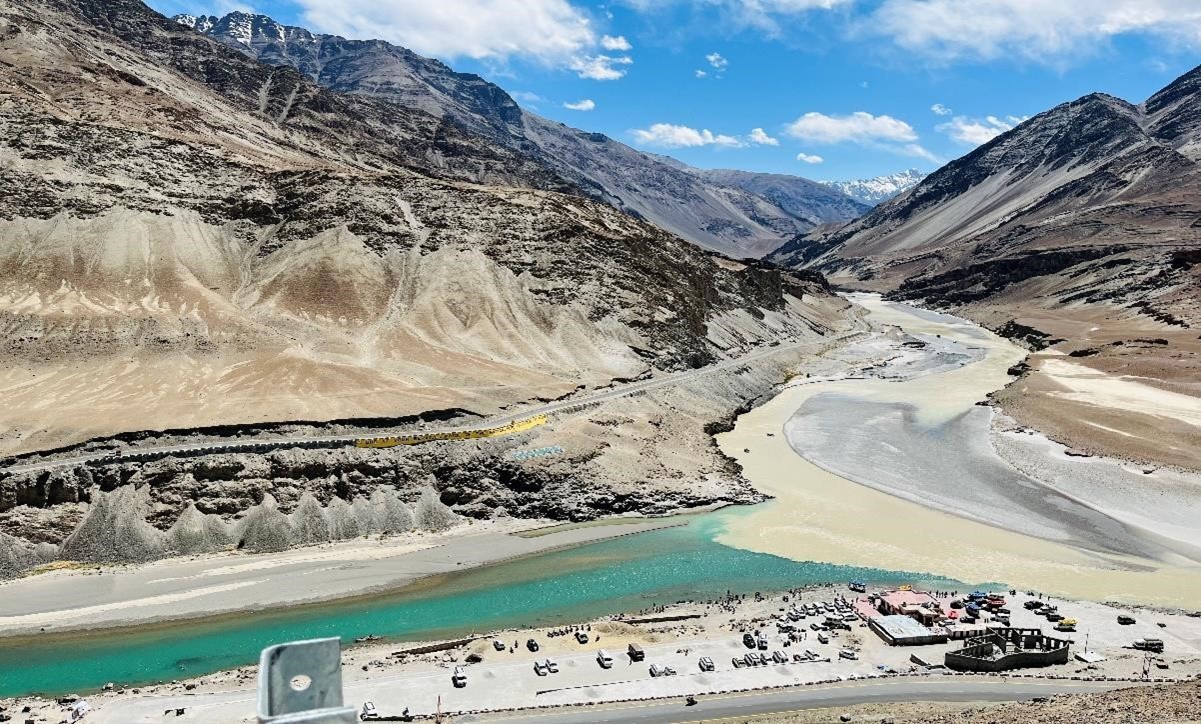
The day concludes with a visit to Sangam, the confluence of the Indus and Zanskar rivers, where the azure waters merge in a mesmerizing display of nature's grandeur. The water rafting experience was the climax of a fulfilling day. The food at our hotel was amazing and we relished every meal during our stay. The staff overall was good at hospitality.
Day 3:
Leaving the comforts of Leh behind, we embarked on a scenic drive to Nubra Valley, a hidden oasis nestled amidst the towering peaks of the Karakoram Range. En route, we traverse the world's highest motorable pass, Khardung La (5,359 m (17,582 ft), where the air goes even thinner. Our driver Mr. Abdul Qayum was friendly, a guide cum local historian. He navigated quickly through the traffic snarl at Khardung La which is a must-stop for all to take photographs. The feeling of walking on the snow here was a thrilling experience.
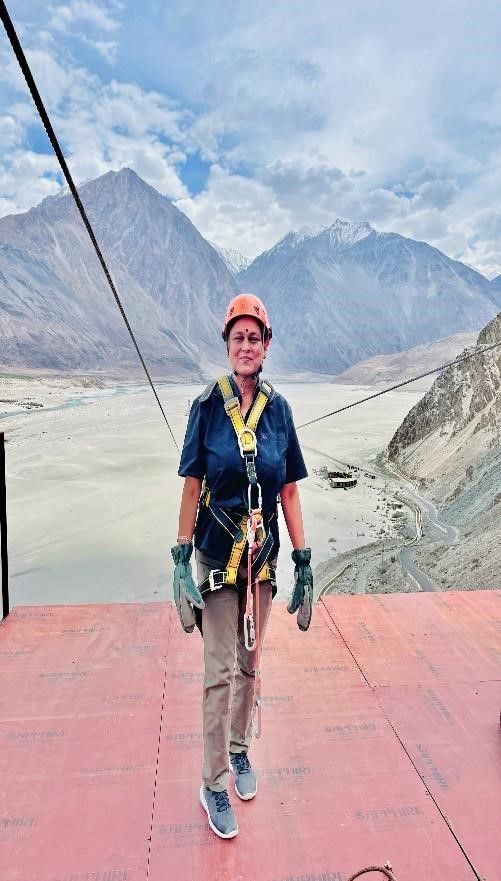
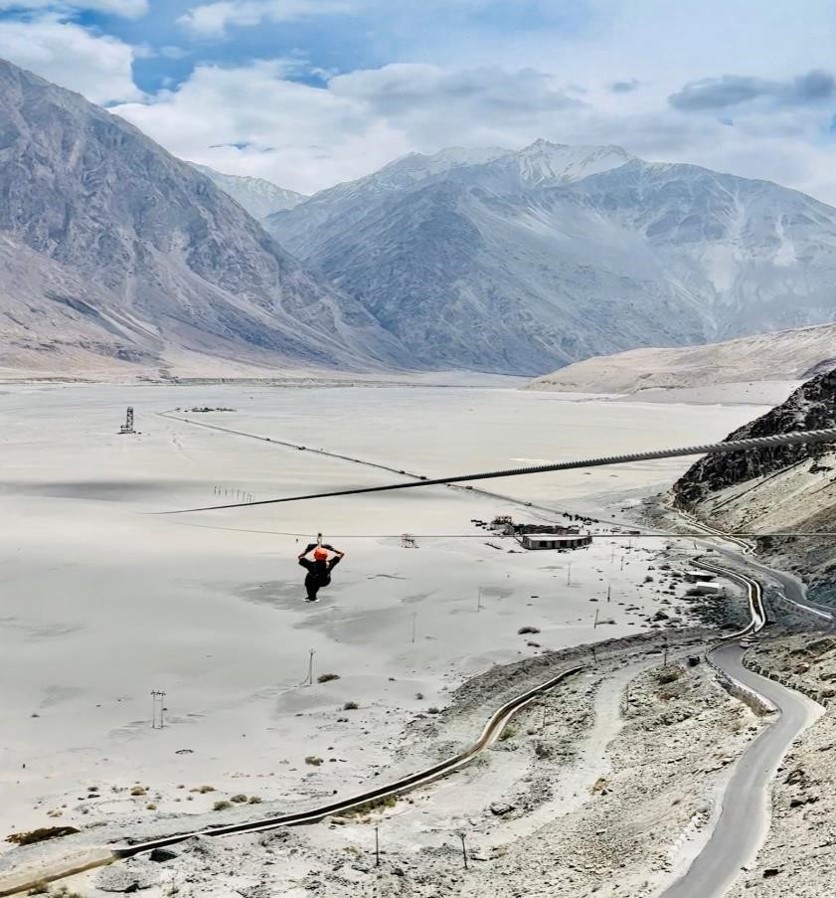
As we arrive in Khalsar, we're tempted by an adventure unlike any other – the world's longest high-altitude zipline at Khalsar Sand Dunes (approx. 14,000 ft). Suspended high above the desert landscape, we soar through the air, adrenaline coursing through our veins as we take panoramic views of the valley below. It's a thrilling experience that adds an extra dimension to our journey.
However, the adventure continues in the form of an exhilarating ATV ride on the dunes. The thrill of controlling our off-road vehicle adds an extra layer of excitement to our exploration of this remote Himalayan paradise. With the wind in our hair and the sun on our faces, we conquer each twist and turn, rewarded with breathtaking views of the surrounding mountains, a testament to the untamed beauty of Nubra. Our ATV driver Mr. Sushil Kangne a friendly guide, great photographer, and a skilled driver, made our ride more exciting with a dose of fast driving in between the dune's rugged terrain. He was from Nasik and stays in Ladakh during the tourism season to earn his livelihood. As we reached Nubra the sight of Bactrian camels or the two-humped camels, against the backdrop of towering dunes was a surreal juxtaposition, a reminder of Ladakh's diverse landscapes. We then enjoyed the double hump ride on the mountain desert and took pictures to cherish the moment. Completely tired we rested in our tents after a scrumptious dinner.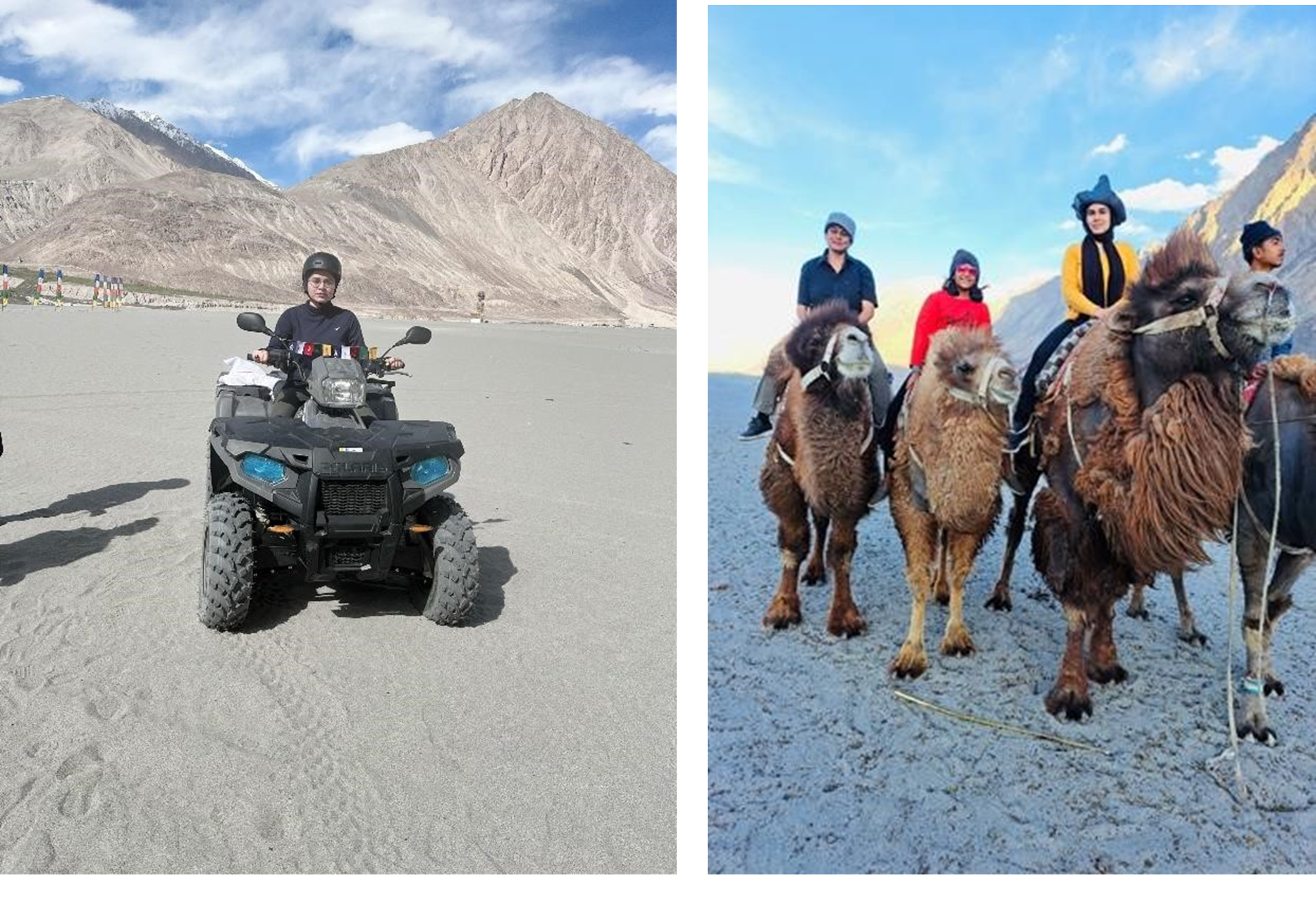
Day 4:
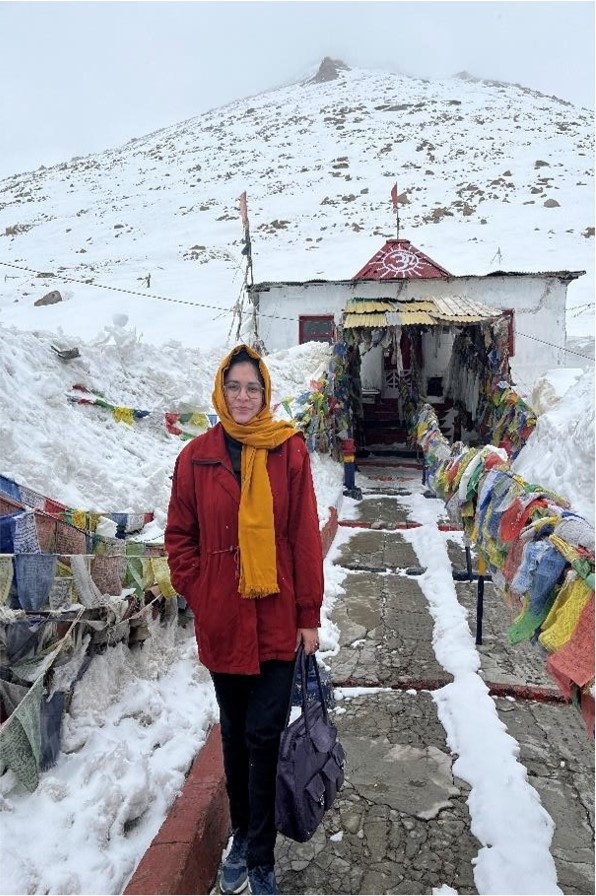
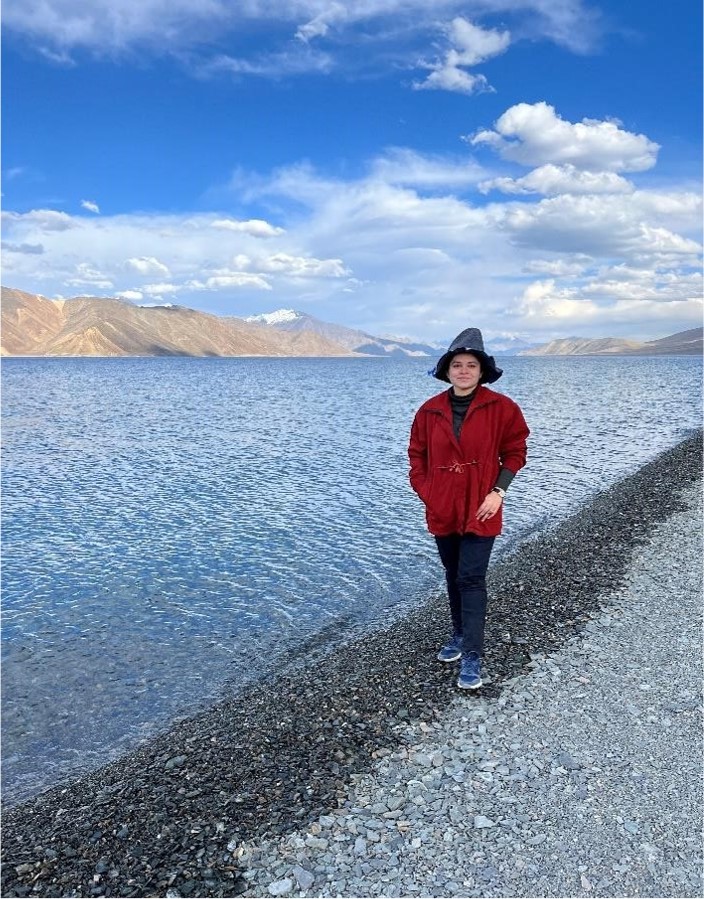
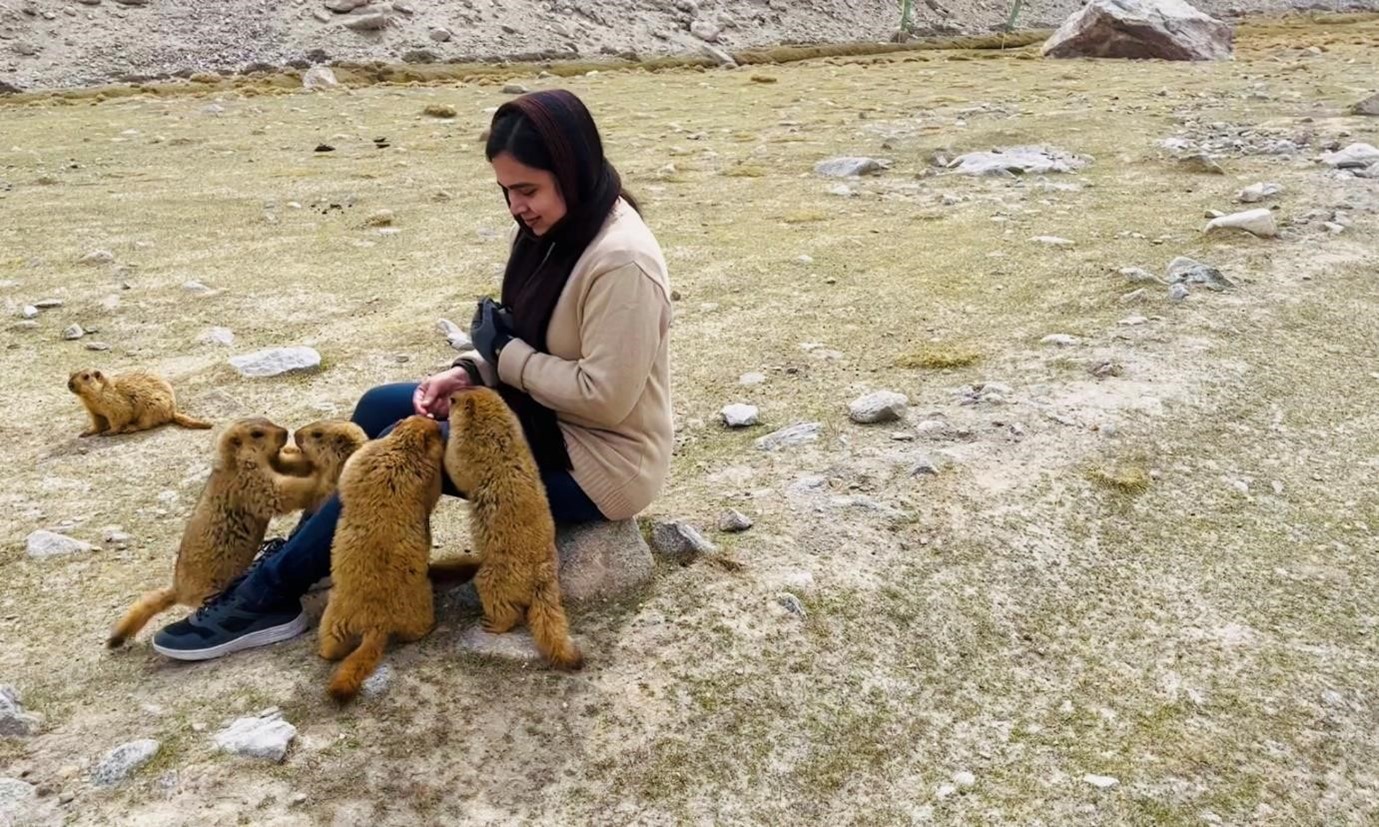
Our next destination beckons – Pangong Lake, a shimmering expanse of turquoise nestled at an altitude of 4225 meters (13,862 ft). We cross the snowy Chang La Pass (5,391/ 17,688 ft.), as the prayer flags flutter in the wind. As we keep moving on the rugged mountain roads, we encounter the playful Himalayan Marmots, that inhabit the sparing flat land of Ladakh. Marmots hibernate from late autumn to early spring, averaging 7 months. These marmots playfully peek from their burrows {between 2 and 10 m (6.6–32.8 ft) deep}, their curious gaze adding to the enchantment of the landscape. The best part was, they willingly accepted the biscuits we offered and playfully got photographed with us.
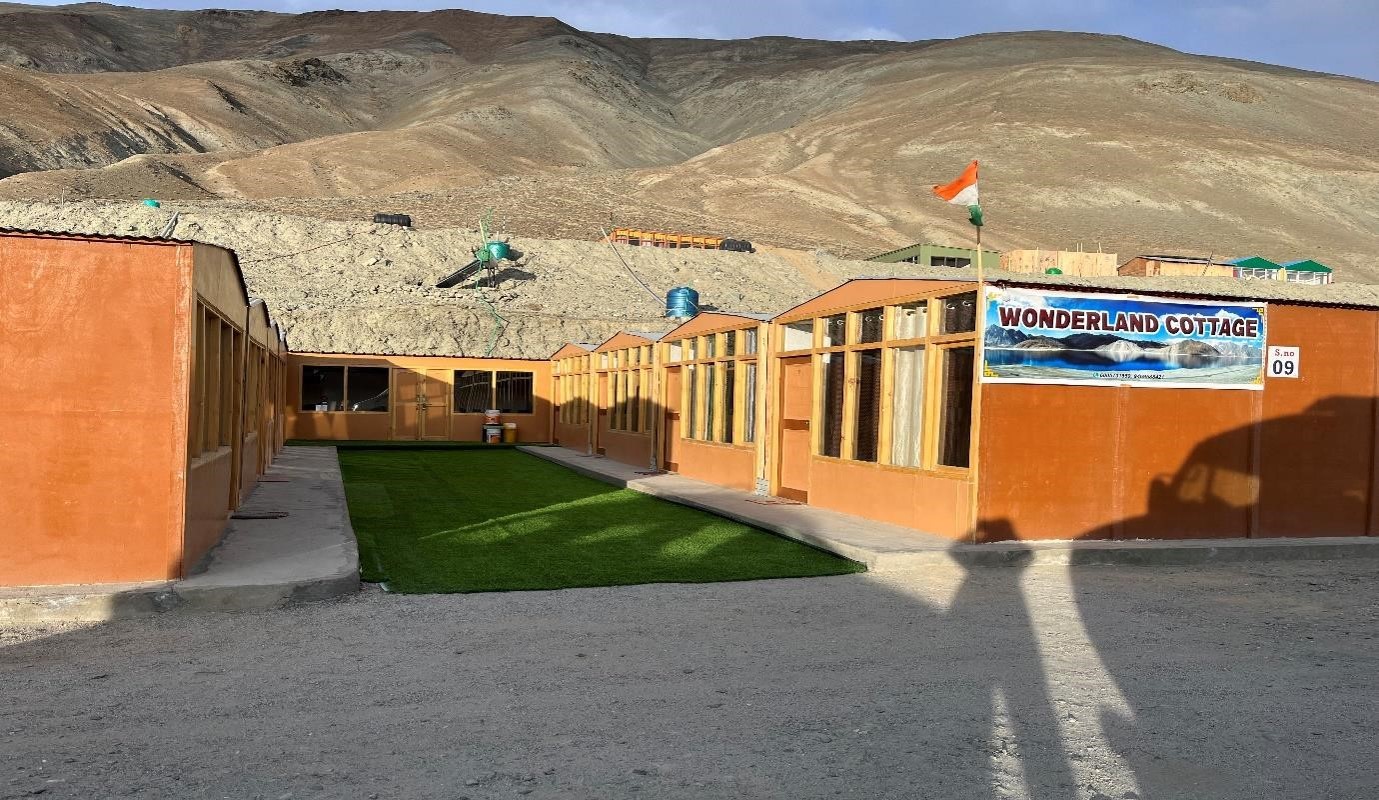
For those seeking solitude, the shores of Pangong Lake provide the perfect sanctuary. Pangong's high winds and ever-changing hues mesmerize, shifting from turquoise to deep blue as the day progresses. Yet, amidst this enchanting splendour, one cannot ignore the challenges that come with spending a night at Pangong Lake. The extreme altitude and rugged terrain pose physical hardships. Accommodations are limited and basic with little in the way of comfort. Electricity is made available for only two hours in the evening through generators. During the night, hot water bags are provided to comfort all from the chilling cold. Limited water usage is recommended and taking a shower is strictly advised against, from a health point of view.
As night falls, Pangong Lake transforms into a realm of ethereal beauty and mystique. Under the blanket of darkness, the stars emerge one by one, painting the sky with their twinkling brilliance. The Milky Way arches overhead like a celestial canopy, casting a spellbinding glow upon the landscape below.
Day 5:

As the sun rises over the majestic landscape of Pangong Lake, the next morning, it unveils a spectacle of unparalleled beauty. The azure waters of the lake shimmer under the golden hues of dawn, casting a riveting reflection of the surrounding mountains. As daylight floods the landscape, revealing every crevice and peak, the true magnificence of this natural wonder continues unfolding.
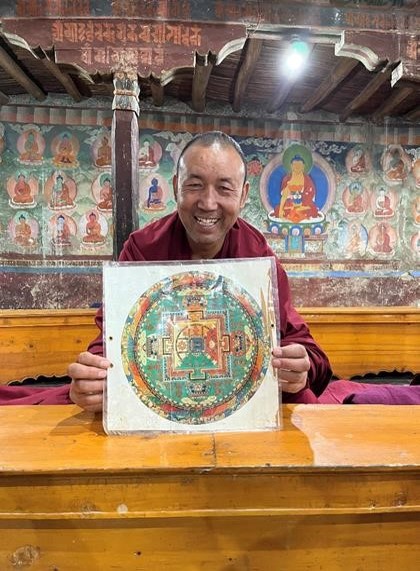
Reluctantly bidding farewell to Pangong Lake, we begin our journey back to Leh. En route, we visit the ancient Hemis Monastery located at an altitude of 3,600 meters (11,800 ft) perched on a hill situated 45 km from Leh. Hemis monastery Ladakh’s opulent giant, was born in the 1630s thanks to King Singge Namgyal's backing and Stag Tsang Raspa's vision. Claiming both "largest" and "richest" monastery titles, it's a must-visit for history buffs. The Hemis festival honouring Lord Padmasambhava (Guru Rinpoche) is held there once every 12 years. Later we drove to the Thiksey Monastery where we met Monk Jampa Thiksey. He shared great wisdom and knowledge about Buddhism with us and then gave us a tour of the Monastery. Special Butter Tea was offered to us when we visited their kitchen also known as the gur gur chai. In Ladakhi, "gur gur" refers to the sound made by the churn used to mix the butter tea, as it's traditionally prepared by vigorously churning the tea with butter to create a frothy consistency. The making of butter tea is not just about combining ingredients; it's a sacred tradition that symbolizes hospitality, warmth, and nourishment in Tibetan culture. Monks often gather together to share this beloved beverage, fostering a sense of community and spiritual connection amidst the challenges of their environment, driving sustenance and warmth in the harsh climates of the high altitudes.
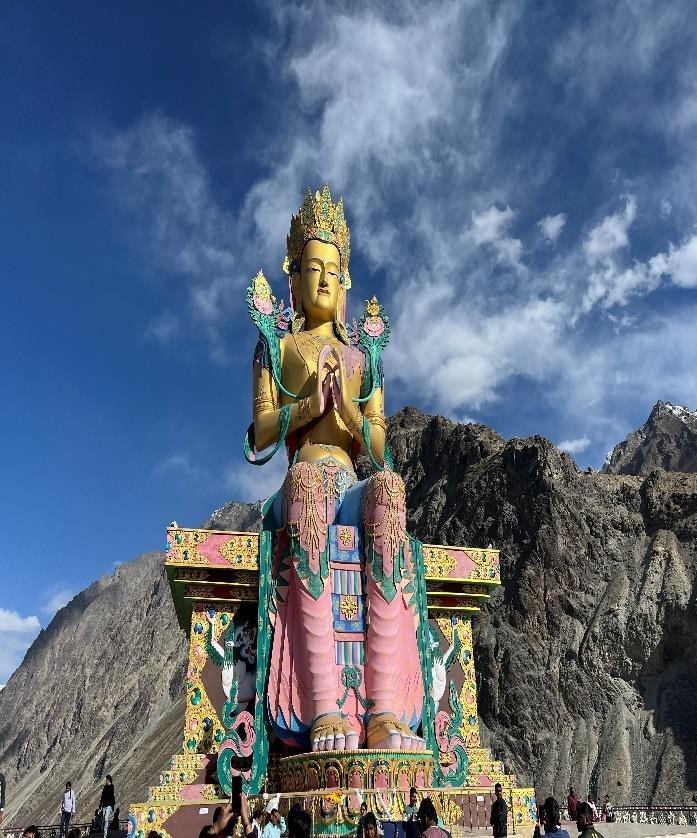
Diskit Monastery is another divine experience we cherished. In the heart of Nubra Valley, Ladakh, Diskit Monastery, also known as Diskit Gompa, stands as a timeless guardian of Buddhist wisdom. As the oldest monastery in the valley, it belongs to the revered Gelugpa (Yellow Hat) sect of Tibetan Buddhism. Overlooking the rugged Himalayan landscape, the majestic 32-meter (106-foot) Maitreya Buddha statue, built in 2010, radiates a profound message of peace, protection, and compassion. Perched on a hill, this iconic structure not only blesses the valley below but also captivates traveller’s with its serene presence, making it a spiritual beacon in the Land of High Passes.
Day 6:
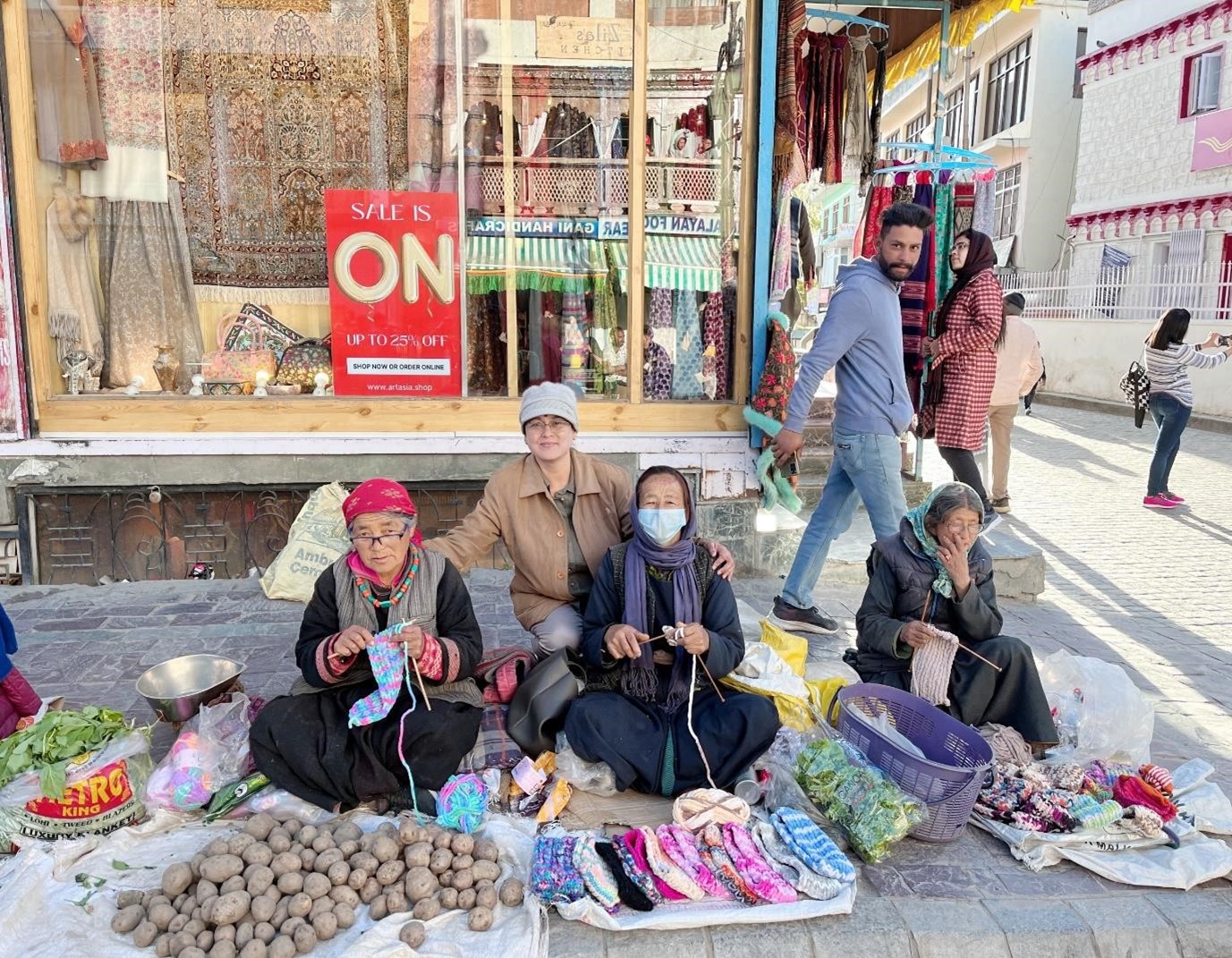
Our last day in Leh is spent exploring the marketplace. The Leh market offers its own brilliance. It is renowned for its high quality Pashmina wool, which is used to make luxurious shawls and scarves. These items are handwoven and often intricately embroidered with traditional designs. Thangka Paintings another specialty is intricate Buddhist scroll paintings depicting various deities, mandalas, and scenes from Buddhist mythology. They are highly valued as religious and artistic objects and are sold as souvenirs in Leh. Handwoven Tibetan carpets, which feature vibrant colours and intricate patterns are prized for their quality and craftsmanship and are often used as decorative pieces in homes and monasteries.


Later in the evening, we ascend to the Shanti Stupa, a gleaming white monument that stands as a beacon of peace in this remote corner of the world. From its lofty perch atop a hill, you get a bird's eye view of Leh. A photoshoot was part of our tour which recorded our lovely moments there.
As we bid farewell to this enchanting land, we carry with us memories that will last a lifetime—memories of snow-capped peaks, crystal-clear lakes, ancient traditions, and warm hospitality, complemented by the cheerful greetings of friendly Himalayan marmots and the untamed wilderness that has captured our hearts for eternity. With a heart heavy yet brimming with memories, I take one last lingering look at my favourite place, whispering a silent farewell, knowing that while my footsteps may fade, a part of me will forever remain.