Blogs
The Grace of the Rainbow!
23. 08. 2026
Beyond Colour
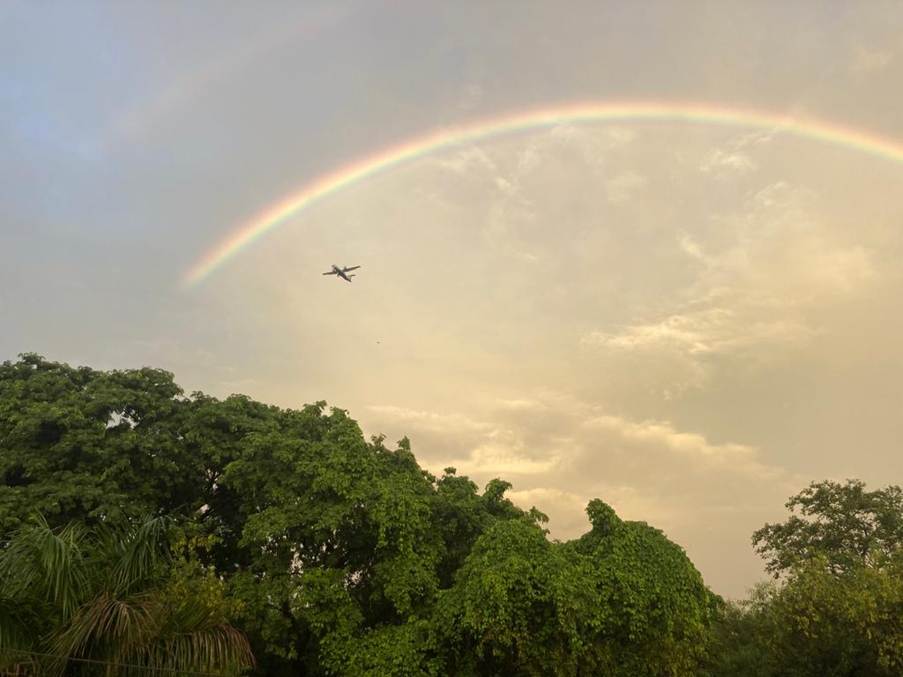
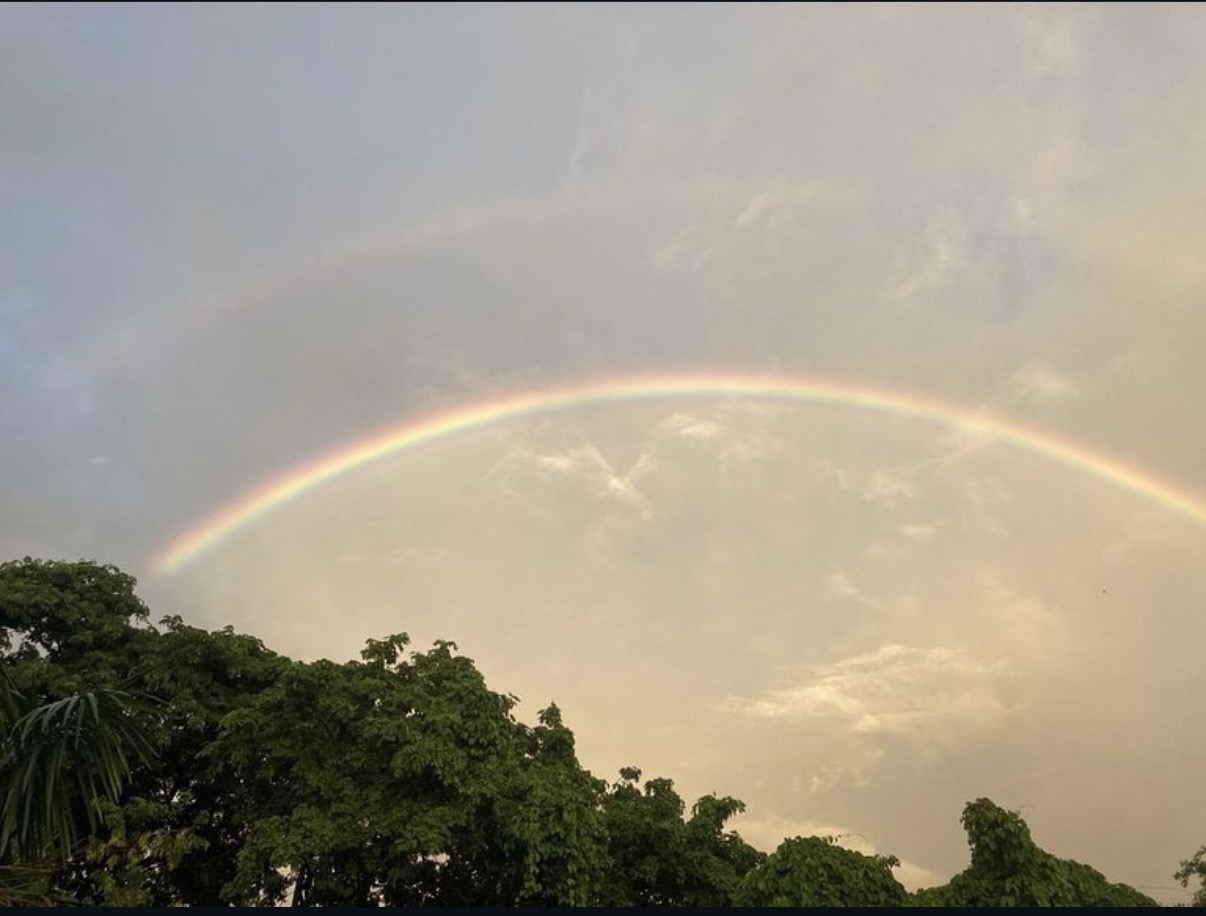
Every rainbow begins as rain. Every philosophy begins as an observation. Rain has always been one of nature's most eloquent contradictions. It arrives as disruption yet restores balance; it obscures horizons even as it nourishes new beginnings. To some it is inconvenience, to others abundance. Perhaps that is why rain has inspired poets as much as scientists—it refuses to belong exclusively to either emotion or explanation. And then, almost as an afterthought, when light chooses to converse with retreating rain, the sky produces one of its most profound ideas: the rainbow. Not merely a spectacle of colour, but a quiet meditation on coexistence, completeness and the extraordinary elegance with which nature reveals its deepest truths.
A rainbow never argues for attention. It occupies the sky without rivalry, proving that significance does not require domination. Each colour retains its own identity, yet none attempts to eclipse another. Remove a single shade and the phenomenon remains incomplete. Nature quietly demonstrates a principle that human ambition often forgets: indispensability is rarely loud.
The spectrum is complete not because every colour is identical, but because every colour remains unmistakably itself. Uniformity creates order; uniqueness creates wholeness.
What makes the rainbow even more fascinating is its refusal to choose between logic and wonder. Every appearance can be explained with remarkable precision through refraction, reflection and dispersion. Physics accounts for every arc and every colour. Yet explanation never diminishes enchantment. Knowing the science does not weaken the miracle; it deepens it. The mind understands the mechanism while the heart continues to experience awe.
The finest lives are built upon the same elegant contradiction. They possess an inner certainty that requires neither performance nor applause. Their confidence is neither theatrical nor defensive because it arises from substance rather than comparison. Like colours in a spectrum, their strengths coexist instead of competing. Integrity does not quarrel with intelligence. Humility does not diminish excellence. Compassion does not weaken authority. Their character derives its power not from a single dominant quality but from the harmony of many.
Modern culture frequently mistakes visibility for value. We are encouraged to occupy more space, speak more often and remain perpetually noticed, as though prominence alone could establish importance. The rainbow offers a quieter philosophy. It never competes with the clouds, the mountains or the horizon. It simply appears in complete fidelity to its own nature, and that authenticity commands attention without demanding it.
Beyond Time
Perhaps this is why the rainbow has remained timeless across civilizations. It reminds us that greatness is not always an act of conquest. Sometimes it is an act of coherence. The most remarkable individuals, like the most remarkable natural phenomena, leave an enduring impression not because they overpower the world around them, but because every part of them belongs exactly where it is.
The rainbow is therefore more than a spectacle of light. It is a lesson in composition. Science constructs it with mathematical precision; beauty completes it with emotional inevitability. Likewise, a meaningful life is assembled through discipline, reason and deliberate choices, yet its true distinction lies in something that no equation can fully measure. The greatest paradox is that what is perfectly explainable can still remain profoundly extraordinary.
Perhaps the rainbow's greatest lesson lies not in its colours but in its refusal to linger. It never mistakes permanence for significance. It arrives without ceremony, transforms the ordinary sky into an unforgettable experience, and disappears before familiarity can diminish its splendour. In a civilisation increasingly obsessed with permanence—permanent visibility, permanent relevance and permanent success—the rainbow quietly proposes a different measure of importance. Influence is not always proportional to duration. Some of the most defining moments in history, relationships, and personal growth have been astonishingly brief, yet they altered everything that followed.
This is a truth that extends far beyond nature. Enduring institutions are not sustained because they resist change but because they preserve their essence while adapting their form. Great ideas survive for the same reason. They do not remain static; they remain recognisable. The rainbow embodies this remarkable balance. Every appearance is unique, shaped by changing angles of light, water, and perspective, yet no one doubts it is still a rainbow. Identity, therefore, is not rigid repetition but coherent continuity.
There is another paradox concealed within its arc. A rainbow has no independent existence. It cannot be collected, possessed or transported. It emerges only when light, water, and the observer occupy precisely the right relationship. Remove any one of these and the rainbow vanishes—not because it has died, but because the conditions for its revelation have disappeared. Much of human excellence follows the same principle. Character may belong to an individual, but greatness often emerges from relationships: between conviction and humility, knowledge and curiosity, ambition and restraint, achievement and purpose. Excellence is less a possession than an alignment.
Perhaps this explains why wisdom is so often mistaken for complexity. We search for elaborate formulas while nature repeatedly demonstrates that profound truths can arise from elegant arrangements. The rainbow is neither accidental nor manufactured. It is what inevitability looks like when the conditions are right. The finest lives resemble it not because they are flawless, but because they bring disparate qualities into such remarkable harmony that their presence appears almost effortless. What others perceive as brilliance is often the visible arc of countless invisible disciplines converging at exactly the right moment.
And that may be the rainbow's most enduring gift to human thought. It invites us to stop asking how brightly we can shine and begin asking how completely we can align. For light becomes a rainbow not by becoming more powerful, but by becoming more fully expressed. Perhaps greatness follows the same law.
Beyond Sight
Yet the rainbow conceals one final mystery. No two people ever see precisely the same rainbow. Although they may stand beside one another, each receives light reflected from different droplets suspended in the atmosphere. The rainbow appears shared, but the experience is uniquely personal. Nature quietly reminds us that reality itself is often less universal than we imagine. Much of what we call certainty is inseparable from perspective.
Perhaps this explains why genuinely remarkable individuals rarely insist on universal agreement. They understand that wisdom is not diminished by differing viewpoints, just as the rainbow loses nothing because every observer encounters a different arc. Conviction does not require uniformity. The strongest ideas are spacious enough to survive interpretation without surrendering their essence.
The rainbow also teaches an overlooked lesson about visibility. It does not create light; it reveals what was already present. Sunlight arrives colourless to the human eye, yet every shade has always travelled within it, waiting for the right conditions to become visible. Human potential often follows the same principle. Talent is seldom manufactured overnight. More often, it is disclosed gradually by adversity, responsibility, curiosity, and experience. Circumstances do not always create character; they illuminate it.
There is, therefore, an important distinction between becoming and uncovering. Modern ambition frequently urges us to become someone else—to acquire new identities, accumulate achievements, and continuously reinvent ourselves. The rainbow suggests a quieter philosophy. Its colours are not additions to light but revelations of its hidden completeness. Growth may sometimes be less about acquiring more than about expressing more faithfully what has existed within us all along.
This is why the rainbow continues to fascinate long after its scientific explanation has become commonplace. It occupies a rare place where precision and poetry refuse to part ways. The intellect recognises a phenomenon governed by immutable laws; imagination encounters an event that still feels impossible. The greatest lives leave a similar impression. Their accomplishments can often be traced to discipline, judgement and perseverance, yet the totality of their presence exceeds the sum of its visible causes. They remain, in the finest sense of the word, inexhaustible.
The rainbow eventually fades, but the question it leaves behind does not. If ordinary light can contain an invisible spectrum awaiting revelation, one wonders how much unseen possibility exists within an ordinary life. Perhaps greatness is not an extraordinary substance bestowed upon a fortunate few. Perhaps it is the patient unveiling of colours that were present from the very beginning, waiting only for the right light to make them visible.
And perhaps that is why every rainbow begins with rain. The world often celebrates the arc while forgetting the shower that made it possible. Yet nature never separates beauty from the conditions that create it. The clouds, the rain, the sunlight, and the observer all belong to the same quiet equation. So do our own lives. Every disappointment, every uncertainty, every season of obscured horizons may be carrying within it colours not yet revealed. The rainbow reminds us that greatness is rarely the triumph over life's storms; more often, it is the graceful arrangement of everything the storm leaves behind. Perhaps the finest lives, like the finest rainbows, are not those untouched by rain, but those that transform it into light.